
What is the point of reading…?
…not the place – as that’s a heteronym – making sure not to offend any residents. Why do we read?
Learning the mechanics of reading
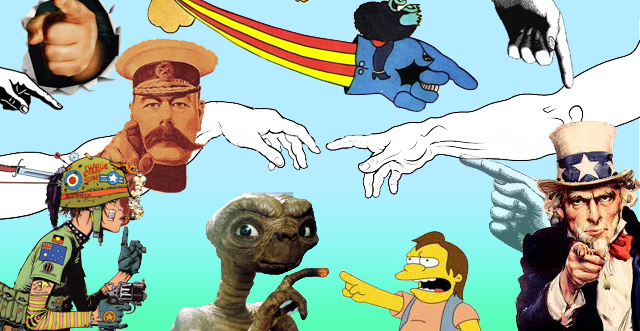
I wasn’t assessed as dyslexic until I was in the second year of my BA Hons. I didn’t really read much until then; I would read the odd graphic novel, but became more interested in copying the pictures of Tank Girl and Joe Pineapples (graphic novel fans will know these characters), eventually stopping reading the story and instead drawing the characters.
With hindsight, being taught to read at school never involved being asked questions to find out how much I had comprehended. Whether we read a novel, article, signpost, invoice or receipt, we do it for understanding. For many, including myself, learning to read as a child was about reading aloud. This was really to enable teachers to make sure that sounding out words and pausing in the correct places was done correctly. It was for the sake of their understanding – to assess my mastery of the mechanics of reading.
Analogically, the reading process I was using – taught in the above way – could be compared to a piano roll (allowing a piano to mechanically play music through perforations on paper). With this in mind, the interpretation of music from a piano roll, e.g. a Bach sonata, would lack the cerebral and emotional interpretation that a classical pianist would give – due to their greater familiarity and understanding of the notation, the composer, and human expression.
Essentially, what I believe I was doing was just “sounding out”. This is the equivalent of what a piano roll would be doing with the perforated notation: producing sounds that relate to the symbols in front of me. For a teacher, this would be the act of reading aloud; however, with my dyslexic mind, I did this successfully without making a real connection to what the collective meaning of the sounds was. Nonetheless, it gave my teachers the satisfaction that I understood the basic mechanics of notation – what symbols related to what sounds – for the purpose of being assessed at a particular literacy level.
Not reading the signs
I became good at using the piano roll process – to the extent that I was always chosen to do long verbal performances for primary school parent and teacher events. This involved a lot of practice, so I could have whatever text’s oral shape chiselled into my long-term memory. I remember performing pieces and the audience laughing at jokes in the text – but I’d be surprised at the laughter, as I had no comprehension that what I was reciting was funny. I knew they weren’t laughing at my performance, as I’d perfected it in rehearsals with teachers’ approval. Retrospectively, I just didn’t understand what I was reading.
Alternatively, one could argue the jokes were for an older audience and went over my head – but this was the case every time I was performing some kind of text I’d been elected to read. In a way, I was like a performing monkey – turning the handle but not knowing why or what for. I think I’m owed some bananas or peanuts at least. However, this monkey used the piano roll technique to bluff his way through school.
Reading, my mind!
So why did I never get the meaning from what I was reading? Well, this relates to the title of this post: “What is the point of reading?” Being dyslexic as well as having ADHD, one of the shared traits is a working memory deficit. Due to this, sequential tasks can prove difficult. Reading is essentially a sequential task that relies on other working memory-related skills, like good visual and phonological processing. Comprehending what I – or anyone else – reads relies heavily on having a strong working memory. However, this may also be due to how we are taught to read.
One of the first things learned on the SuperReading™ course is how to relearn using your finger while reading. Now this may seem basic and simple, but for me, reintroducing it was profound. Ron Cole gave an example of something natural to us as human beings: whilst mid-lecture, he unexpectedly threw a piece of screwed-up paper across the room – and we all followed the paper’s trajectory with our eyes. He pointed this out, and I thought it was interesting: we, as a group, all tracked the paper ball, like an audience watching a tennis match.
As human beings, we’re designed to hunt (apologies to the vegetarians – I was once vegetarian too, until I learned about the Hunter vs. Farmer theory1). We have binocular vision, like most predatory mammals, which helps us better judge where our prey is – essentially, keeping our eyes on the prize. We have peripheral vision that helps us notice things to either side of us, whether predator or prey. According to recent research, dyslexics have better peripheral vision2. Could this be a factor in why the dyslexic mind finds it difficult to read – why words blur or seem to move off the page? Pointing your finger (or a spear) at prey would improve focus if it meant successfully hunting. Hunting is more natural to humans than reading is. With the Australian Aborigines in mind – a society that hunts (or hunted, in some cases) – there’s less need to read and write in order to survive.
What is natural?
One morning while I was on the course, I was having breakfast with my family. My son – around nine months old at the time – pointed at an apple he wanted to eat. I realised that neither my wife nor I had ever taught him to point at something; it was something he instinctively and innately did. The act of pointing at something outside of oneself is an expression of cognition, inborn in the majority of human beings.
In many cultures we are socialised out of pointing – we’re told as children that it’s rude. Paradoxically, when learning to read with the intention of mastering the mechanical process, we are told to use our finger – but without good reason, we’re eventually told that there’s “no need to point”. In doing so, I feel teachers are quite literally missing the point.
Footnotes
- Thom Hartmann and John J Ratey, ADD Success Stories: A Guide to Fulfilment for Families with Attention Deficit Disorder: Maps, Guidebooks, and Travelogues for Hunters in This Farmer’s World (Grass Valley, Calif.: Underwood Books, 1995).
- Annie Murphy Paul, ‘The Upside of Dyslexia’, The New York Times, 4 February 2012, section Opinion / Sunday Review
http://www.nytimes.com/2012/02/05/opinion/sunday/the-upside-of-dyslexia.html [accessed 8 September 2012].