Our friends at AchieveAbility who have worked hard for the Neurodiversity movement for over 10 years.
The Westminster AchieveAbility Commission on dyslexia & neurodivergence will be investigating the barriers to employment and identify recruitment processes that disadvantage neurodivergent people (ASD, ADHD, dyslexia, dyspraxia, dyscalculia, Asperger’s). Their aim is to find out how recruitment and probation processes might be improved and highlight good practice in these areas.
The information will help inform the creation of a report with the intention of providing recommendations to the Government to remove barriers to employment and identify recruitment processes that disadvantage neurodivergent people. The Commission will feed into the government goal of ‘Halving the Disability Employment Gap’ by 2020. People who identify with the traits related to neurodivergence, represent the highest percentage of adults who are disabled. This Commission is vital in order to represent the issues for this community, as well as revealing their intellect, value and strengths within the workplace.
Intended outcomes of the Commission
- To close the dyslexic and neurodivergent employment gap
- To demonstrate barriers to recruitment
- To consider how dyslexic and neurodivergent people deal with disclosure
- To profile a set of good practice case studies
- To outline a series of recommendations on policy, law and practice
- To feed into the government’s stated aim of Halving the Disability Employment Gap
If you would like to share your opinions and experiences complete the survey
On another note it’s great to see another organisation using the term Neurodivergent as an adjective rather than “neurodiverse”.

 The project work was originally funded by the HEFCE (Higher Education Funding Council for England). It was directed by Dr David Pollak, formerly Principal Lecturer in Learning Support and National Teaching Fellow at De Montfort University, Leicester, UK. This site holds information which was previously scattered, as well as new materials applicable to higher education where none existed previously. The majority of the work on developing the site was done by Edward Griffin of the Health & Life Science Faculty at De Montfort University. BRAIN.HE then went on to be funded by the London School of Economics Annual Fund and hosted by the LSE Neurodiversity Team.

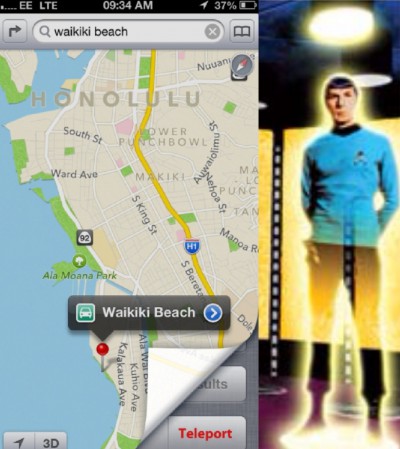
 the iPod touch loop… (hmmnn, there already is a product called iLoop). This is great if your an iTouch user, especially since there has been recognition and recommendations for the use of iTouches as a PDA (Portable Digital Assistant) for recipients of the Disabled Student Allowance (DSA). Unfortunately the iPhone 5 didn’t have “the thing that sticks out” that allows for the iLoop attachment. I was looking into alternatives, as I liked the idea of it being attached to me. Some may think that this is a little obsessive, however use of a PDA is essential to help anyone with executive function difficulties to fit into contemporary society.
 stolen and more. MyBunjee was a product pitched by duo Emma Jones and Mark Ferguson, which got the interest of the dyslexic dragon Duncan Banotyne and the essential winning bid from dragon Peter Jones (a Telecommunications Business expert). The MyBunjee product is essentially something that stops your expensive and delicate smartphone hitting the deck accidentally. With regard to my own smartphone, I had dropped my iPhone 3GS numerous times on wooden floors, pavements and even face planting the phone as it fell out of my pocket, onto the road whilst putting my kids in the car. The amazing thing is, it has never had crack… good luck I think, as luck is a state of mind.
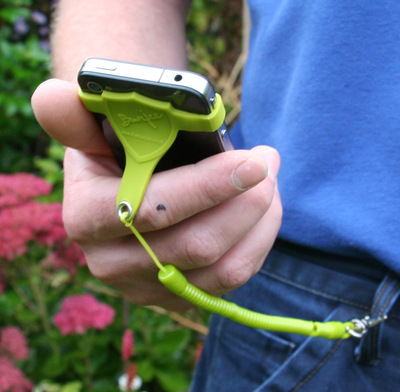 The MyBunjee isn’t a new concept. There are of course those springy key-rings that can be attached to a bunch of keys so that:







 of ADHD or to have been presumed to be or have been ADHD. Prominent individuals who have “come out” as having an ADHD diagnosis include: Michael Phelps, Justin Timberlake, Britney Spears, Jim Carrey and Rory Bremner to name a few. Those that have been presumed to have had traits that would fit symptom traits include Sigmund Freud, Richard Branson (who is dyslexic so far I have not read from a reliable source or heard him mention he has had a diagnosis of ADHD, please comment with a link if you have found one), Thomas Edison and Steve Jobbs etc etc etc.
 creativity in many fields, a high IQ, divergent and quick thinking, a good sense of humour and the ability to hyper-focus. Having a diagnosis of ADHD myself, I can say from an observation of my skill set that this is true (yes I know it sounds smug). However in this world of two poles, for every positive there is probably a negative. One could ask, how strong is the negative pull, if there are any strategies to help pull in the opposite direction; this all depends on what life has served up for each individual with an ADHD diagnosis. To get a better perspective there is a study at the Institute of P
 sychiatry entitled “The Advantages of ADHD”.