
The other week my wife and I were discussing iPhone insurance, having hers stolen on the London Underground (mothers of small children, looking flustered due to pushchairs and baby accessories are targets for predatory gadget hunters with no scruples or courage).
When the iPhone 5 came out, along with the new iPod Touch, a feature the iPod touch came with was the… iHook, iTag or was it iStrapOn… let me check…  the iPod touch loop… (hmmnn, there already is a product called iLoop). This is great if your an iTouch user, especially since there has been recognition and recommendations for the use of iTouches as a PDA (Portable Digital Assistant) for recipients of the Disabled Student Allowance (DSA). Unfortunately the iPhone 5 didn’t have “the thing that sticks out” that allows for the iLoop attachment. I was looking into alternatives, as I liked the idea of it being attached to me. Some may think that this is a little obsessive, however use of a PDA is essential to help anyone with executive function difficulties to fit into contemporary society.
Whilst watching Dragons Den last month, I saw something that I thought would help with the not getting it 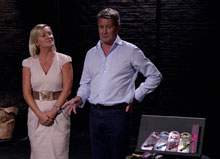 stolen and more. MyBunjee was a product pitched by duo Emma Jones and Mark Ferguson, which got the interest of the dyslexic dragon Duncan Banotyne and the essential winning bid from dragon Peter Jones (a Telecommunications Business expert). The MyBunjee product is essentially something that stops your expensive and delicate smartphone hitting the deck accidentally. With regard to my own smartphone, I had dropped my iPhone 3GS numerous times on wooden floors, pavements and even face planting the phone as it fell out of my pocket, onto the road whilst putting my kids in the car. The amazing thing is, it has never had crack… good luck I think, as luck is a state of mind.
The product solves the problems of it getting lost, misplaced and even as a theft deterrent. With an ADHD diagnosis, an explanation to working memory difficulties is provided; the constant loss of things like keys, pens and the all essential smartphone, can cause a lot of unnecessary stress and anxiety. With dyspraxia the same can apply about losing things, but you also have the higher risk of accidentally dropping these delicate devices, due to motor difficulties. With the above risk factors and their frequent occurrence, insurance can be a costly, unfortunate yet necessary thing to have.
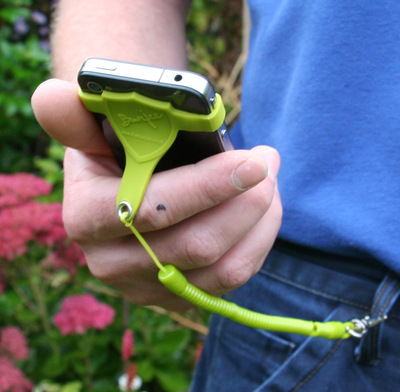 The MyBunjee isn’t a new concept. There are of course those springy key-rings that can be attached to a bunch of keys so that:
- They are less likely to get lost or misplaced
- They can be lifted to a height that allows them to be used.
It’s the patent-pending rubber band and link to the spring attachment that allows the MyBungee to be adaptable to any PDA type device. They retail around £6 from most websites including postage and packing. I think they are well worth the price as they give you an extra peace of mind, and you can also watch your smartphone do death defying adrenaline junky bunjee jumps, while also looking like an 80s break-dancer or tennis player wearing a head sweatband.
 of ADHD or to have been presumed to be or have been ADHD. Prominent individuals who have “come out” as having an ADHD diagnosis include: Michael Phelps, Justin Timberlake, Britney Spears, Jim Carrey and Rory Bremner to name a few. Those that have been presumed to have had traits that would fit symptom traits include Sigmund Freud, Richard Branson (who is dyslexic so far I have not read from a reliable source or heard him mention he has had a diagnosis of ADHD, please comment with a link if you have found one), Thomas Edison and Steve Jobbs etc etc etc.
 creativity in many fields, a high IQ, divergent and quick thinking, a good sense of humour and the ability to hyper-focus. Having a diagnosis of ADHD myself, I can say from an observation of my skill set that this is true (yes I know it sounds smug). However in this world of two poles, for every positive there is probably a negative. One could ask, how strong is the negative pull, if there are any strategies to help pull in the opposite direction; this all depends on what life has served up for each individual with an ADHD diagnosis. To get a better perspective there is a study at the Institute of P
 sychiatry entitled “The Advantages of ADHD”.