Getting lost and disorientated, is something that happens to many people recognised with neurological differences such as: Dyslexia, Dyspraxia, Aspergers and ADHD; but is that such a bad thing?
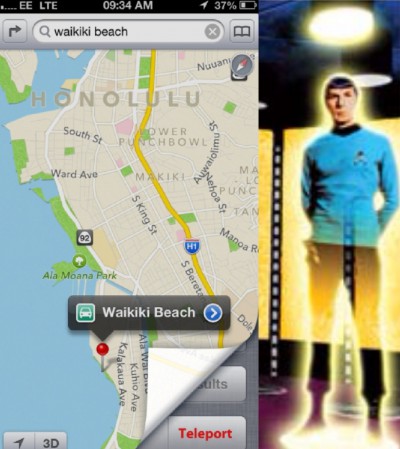
Being dyslexic and ADHD, getting lost can be a regular occurrence, this doesn’t always bode well when time is not on your side and you have a meeting to get to. So, if I get disorientated, the numerous applications on my iPhone help me get from place to place, whether travelling on foot, public transport or by car. As of yet, I haven’t learned how to fly a helicopter or aeroplane, but “I’m sure there is an app for that”. However, the thing I’m waiting for the most is the Teleportation app. I imagine that I would be able get my surfboard and gear together (already have a water proof iphone case), find Waikiki beach in Honolulu on my maps app and press the red “Teleport button”. I’m not sure what the EE network charge would be for a human body email attachment.
A consideration must be given to how getting lost, at times, can have its pluses: if you take the route that everyone takes, you will be seeing what everyone has seen; getting lost may allow you to discover something that may have been overlooked. I’m sure Christopher Columbus would have agreed, had he not got lost, one could postulate that we may not have Big Macs or Cadillacs (which in my eyes is not a bad thing!).
Just a thought! The next time you get lost, try not to get anxious, allow yourself to become aware of the environment around you, concentrate on your breath to help you relax. You will be seeing something new, from seeing something new and being aware of these new surroundings your brain is making new connections…. and who knows what you might find?
Here is an of interesting article about orientation and the brain.
Spatial orientation and the brain the effects of map reading and navigation
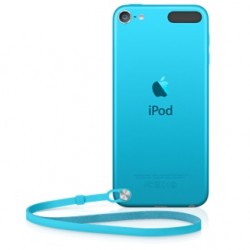 the iPod touch loop… (hmmnn, there already is a product called iLoop). This is great if your an iTouch user, especially since there has been recognition and recommendations for the use of iTouches as a PDA (Portable Digital Assistant) for recipients of the Disabled Student Allowance (DSA). Unfortunately the iPhone 5 didn’t have “the thing that sticks out” that allows for the iLoop attachment. I was looking into alternatives, as I liked the idea of it being attached to me. Some may think that this is a little obsessive, however use of a PDA is essential to help anyone with executive function difficulties to fit into contemporary society.
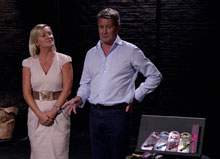 stolen and more. MyBunjee was a product pitched by duo Emma Jones and Mark Ferguson, which got the interest of the dyslexic dragon Duncan Banotyne and the essential winning bid from dragon Peter Jones (a Telecommunications Business expert). The MyBunjee product is essentially something that stops your expensive and delicate smartphone hitting the deck accidentally. With regard to my own smartphone, I had dropped my iPhone 3GS numerous times on wooden floors, pavements and even face planting the phone as it fell out of my pocket, onto the road whilst putting my kids in the car. The amazing thing is, it has never had crack… good luck I think, as luck is a state of mind.
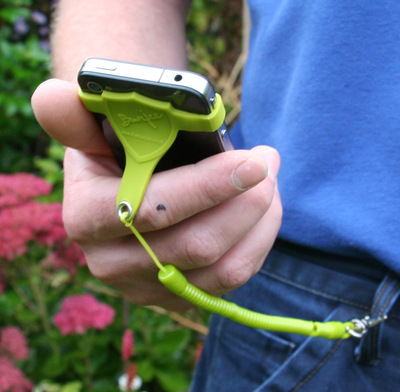 The MyBunjee isn’t a new concept. There are of course those springy key-rings that can be attached to a bunch of keys so that:
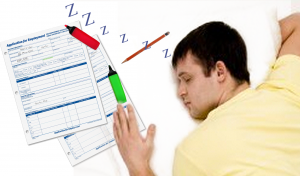 The image above can resonate with some of us, how filling in forms can infuriate and take a lot of energy out us, leaving us tired and frustrated and sometimes not even wanting to bother. Well that’s how society can exclude many of us with neurological differences. A big sigh when we see them and a bigger sigh when they are complete when it comes to dyslexia and filling in forms.