
• Skip to primary navigation
  • Skip to main content
  • Skip to primary sidebar
NeuroKnowHow

NeuroKnowHow

Neurodiverse People Who Know How

Menu
  • Home
  • About
    • Close
    • Know about our services
    • Know-how difference
    • Know our experience
    • Know our testimonials
    • Close
  • Know us
    • Close
    • Joseph Aquilina
    • Louise Grimmett
    • Nilsa Abdula
    • Matthew Hancock
    • Victoria Capewell
    • Dr Ross Cooper
    • Dr Elizabeth Capewell
    • Close
  • Our services
    • Close
    • ADHD Coaching
    • Assistive Technology Tutoring
    • Specialist Study Skills Support (SpLD or ASC)
    • DSA Specialist Mentoring (Mental Health)
    • Specialist Mentoring (Autistic Spectrum)
    • Visual Reading course
    • Support for students in Years 10-13
    • Courses & Workshops
    • Close
  • For Needs Assessors
  • Resources
    • Close
    • Information
      • What is Neurodiversity?
      • Adult ADHD Information
      • What is Dyslexia?
      • Dyspraxia & DCD Information
      • DSA Non Medical Helper rates
      • Glossary
    • Questionnaires
      • Adult ADHD questionnaire
      • Adult Dyslexia Questionnaire
      • Adult Dyspraxia Questionnaire
      • Multiple-intelligence questionnaire
    • Freebies
      • Free strategy printouts
    • Policy and Procedures
      • Complaints Policy
      • Complaints Procedure
    • Close
  • News & Blog
  • Connect with us…
    • Close
    • Send us a message
    • Service feedback
    • Login
    • Close
    • Close
    • Close

ADHD/ADD

Mind Wandering and ADHD

14/12/2016 by brain-e

Mind WanderingAs the song goes…

“‘Cause I’m a wanderer, yeah a wanderer
I roam around around around, around, around”

Interesting article on the BBC Radio 4 All in the Mind Programme on ADHD and Mind Wandering. UKAAN’s Philip Asherson Professor of Clinical and Molecular Psychiatry at Kings College London and a consultant at the Maudsley Hospital in London talks to Claudia Hammond about recently published research that highlights  excessive mind-wandering might be at the core of ADHD. The programme also  hears experiences from two teenage girls with ADHD about their experience of mindwandering whilst at school.


Filed Under: ADHD/ADD, Neurodiversity, Research

Why don’t you get lost!

15/04/2013 by brain-e

Getting lost and disorientated, is something that happens to many people recognised with neurological differences such as: Dyslexia, Dyspraxia, Aspergers and ADHD; but is that such a bad thing?

Being dyslexic and ADHD, getting lost can be a regular occurrence, this doesn’t always bode well when time is not on your side and you have a meeting to get to. So, if I get disorientated, the numerous applications on my iPhone help me get from place to place, whether travelling on foot, public transport or by car. As of yet, I haven’t learned how to fly a helicopter or aeroplane, but “I’m sure there is an app for that”. However, the thing I’m waiting for the most is the Teleportation app. I imagine that I would be able get my surfboard and gear together (already have a water proof iphone case), find Waikiki beach in Honolulu on my maps app and press the red “Teleport button”. I’m not sure what the EE network charge would be for a human body email attachment.

iPhoneSpockBeam image

A consideration must be given to how getting lost, at times, can have its pluses: if you take the route that everyone takes, you will be seeing what everyone has seen; getting lost may allow you to discover something that may have been overlooked. I’m sure Christopher Columbus would have agreed, had he not got lost, one could postulate that we may not have Big Macs or Cadillacs (which in my eyes is not a bad thing!).

Just a thought! The next time you get lost, try not to get anxious, allow yourself to become aware of the environment around you, concentrate on your breath to help you relax. You will be seeing something new, from seeing something new and being aware of these new surroundings your brain is making new connections…. and who knows what you might find?

Here is an of interesting article about orientation and the brain.

Spatial orientation and the brain the effects of map reading and navigation

Filed Under: ADHD/ADD, Aspergers, Assistive Technology, Dyscalculia, Dyslexia, Dyspraxia, Joseph's Blog, Neurodiversity Tagged With: iPhone, orientation

MyBunjee Strap-on for the accident prone and adrenaline junky phones

04/12/2012 by brain-e

The other week my wife and I were discussing iPhone insurance, having hers stolen on the London Underground (mothers of small children, looking flustered due to pushchairs and baby accessories are targets for predatory gadget hunters with no scruples or courage).

When the iPhone 5 came out, along with the new iPod Touch, a feature the iPod touch came with was the… iHook, iTag or was it iStrapOn… let me check… iPhone Leashthe iPod touch loop… (hmmnn, there already is a product called iLoop). This is great if your an iTouch user, especially since there has been recognition and recommendations for the use of iTouches as a PDA (Portable Digital Assistant) for recipients of the Disabled Student Allowance (DSA). Unfortunately the iPhone 5 didn’t have “the thing that sticks out” that allows for the iLoop attachment. I was looking into alternatives, as I liked the idea of it being attached to me. Some may think that this is a little obsessive, however use of a PDA is essential to help anyone with executive function difficulties to fit into contemporary society.

Whilst watching Dragons Den last month, I saw something that I thought would help with the not getting it The Peoplestolen and more. MyBunjee was a product pitched by duo Emma Jones and Mark Ferguson, which got the interest of the dyslexic dragon Duncan Banotyne and the essential winning bid from dragon Peter Jones (a Telecommunications Business expert). The MyBunjee product is essentially something that stops your expensive and delicate smartphone hitting the deck accidentally. With regard to my own smartphone, I had dropped my iPhone 3GS numerous times on wooden floors, pavements and even face planting the phone as it fell out of my pocket, onto the road whilst putting my kids in the car. The amazing thing is, it has never had crack… good luck I think, as luck is a state of mind.
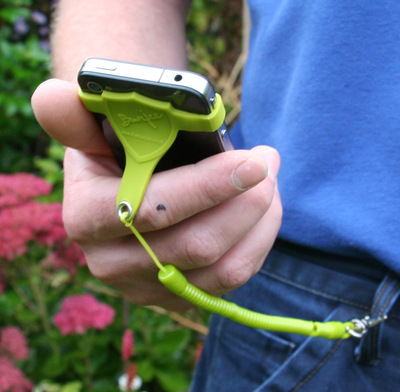
The product solves the problems of it getting lost, misplaced and even as a theft deterrent. With an ADHD diagnosis, an explanation to working memory difficulties is provided; the constant loss of things like keys, pens and the all essential smartphone, can cause a lot of unnecessary stress and anxiety. With dyspraxia the same can apply about losing things, but you also have the higher risk of accidentally dropping these delicate devices, due to motor difficulties. With the above risk factors and their frequent occurrence, insurance can be a costly, unfortunate yet necessary thing to have.

mybunjee-keeps-your-phone-safeThe MyBunjee isn’t a new concept. There are of course those springy key-rings that can be attached to a bunch of keys so that:


    1. They are less likely to get lost or misplaced
    2. They can be lifted to a height that allows them to be used.

It’s the patent-pending rubber band and link to the spring attachment that allows the MyBungee to be adaptable to any PDA type device. They retail around £6 from most websites including postage and packing. I think they are well worth the price as they give you an extra peace of mind, and you can also watch your smartphone do death defying adrenaline junky bunjee jumps, while also looking like an 80s break-dancer or tennis player wearing a head sweatband.

Filed Under: ADHD/ADD, Assistive Technology, Dyspraxia, Joseph's Blog, Neurodiversity Tagged With: ADHD, Dyspraxia, iPhone

What is the point of reading? Why do we read?

08/09/2012 by brain-e

whats_the_point-640x360

What is the point of reading…?

…not the place as that is a heteronym, making sure not to offend any residents. Why do we read?

Learning the mechanics of reading

I wasn’t assessed as dyslexic until I was in the second year of my BA Hon’s. I didn’t really read much till then; I would read the odd graphic novel, but become more interested in copying the pictures of Tank Girl and Joe Pineapples (graphic novel fans will know these characters), eventually stop reading the story and start drawing the characters.

With hindsight being taught to read at school never involved being asked questions to find out how much comprehension I obtained from what I read. Whether we read a novel, article, signpost, invoice or receipt, we do it for understanding. For many including myself, learning to read as a child was about reading out loud. This was really to enable teachers to make sure that sounding out words and pausing in the correct places, is done correctly. This was done for the sake of their understanding, with the intention of assessing my mastery of the mechanics of reading.

Analogically, the reading process I was using after being taught in the above way could be compared to a Piano Roll (allowing a piano to mechanically play music through perforations on paper). With this in mind, the interpretation of music from a Piano Roll, e.g. a Bach sonata, would lack the cerebral and emotional interpretation that a classical pianist would give: due to a greater familiarity and understanding of the notation, the composer and human expression.

Essentially, what I believe I was doing, was just “sounding out”. This is the equivalent of what a Piano Roll would be doing with the perforated notation: producing sounds that relate to the symbols in front of me. For a teacher this would be the act of reading out loud; however, with my dyslexic mind, this was done successfully without making a real connection to what the collective meaning of the sounds were. Nonetheless, it would give my teachers the satisfaction that I understood the basic mechanics of the notation; what symbols related to what sound, for the purpose of being assessed for that particular literacy level.

Not Reading the signsfing1

I became good at using using the Piano Roll process, to the extent that I was always chosen to do long verbal performances for primary school parent and teacher events. This involved a lot of practice, so I could have whatever text’s sound oral shape chiseled into my long-term memory. I remember performing the pieces and an audience laughing at jokes that were in the text; but I would be surprised at the laughter, as I had no comprehension that what I was reciting was a joke. I knew they weren’t laughing at my performance as I had perfected it in rehearsals, with teachers’ approval; retrospectively, I just didn’t understand what I was reading. Alternatively one could argue that the jokes were for an older audien

ce and that they were just go over my head, but this was the case for every time I was performing some kind of text, that I was elected to do. In a way I was a bit like a performing monkey, turning the handle but not knowing why and what for, I think I’m owed some bananas or peanuts at least. However, this monkey used this Piano Roll technique to bluff my way through school.

Reading, My Mind!fing2

So why did I never get the meaning from what I was reading. Well this relates to the title of this post: “What is the point of Reading?” Being dyslexic as well as ADHD, one of the definitions that dyslexia and ADHD have in common is a working memory deficit. Due to this working memory deficit, sequential tasks can prove to be a bit difficult. Essentially, reading is a sequential task that relies on other skills related to the working memory: having a good visual processing and phonological processing skills. Cognition of what I or anyone else reads relies heavily a good working memory. However, this maybe due to the way that we are all taught to read.

One of the first things learned on the SuperReading™ course is to relearn how to use your finger when reading. Now this may seem basic and simple, but for me reintroducing this was profound. Ron Cole gave an example of what comes natural to us as human beings: whilst in mid-lecture, he unexpectedly threw a piece of screwed up paper across the room, we all followed the paper’s trajectory with our eyes. He pointed this out, and I thought this was interesting; as we as a group all tracked the rolled up ball of paper, like an audience in a tennis match.

As human beings we are designed to hunt for things (apologies to the vegetarians I was once vegetarian too, till I learned about the Hunter Vs. Farmer theory
1
), we have binocular vision, which the majority of predatory mammals have. This helps predators get better judgement of where their prey is, essentially keeping their eyes on the prize. We have peripheral vision that helps us to notice things that are either side of us, whether it is a predator or prey. According to recent research dyslexics have better peripheral vision2, could this be a factor as to why it is difficult for a dyslexic mind to read and why words blur or move off the page. Pointing you’re your finger or a spear at prey would allow for better focus, if that meant you had to successfully hunt. Hunting is more of natural activity to humans than reading is. With the Australian aborigines in mind, a society that hunts (or hunted in some cases), there is less of a need to read and write to survive.

What is Naturalfing4-300x152

One morning whilst I was on the course I was having breakfast with my family. My son to at the time was around nine months old pointed at an apple that he wanted to eat. I recognised, that neither my wife nor I had ever taught him how to point at something; it was something that he did instinctively and innate. The act of pointing at something outside of ones self is an expression of cognition, inborn in the majority of all human beings. In the many cultures we are socialised out of pointing; we are told as children, that it is rude to point. Paradoxically, when learning to read with the intention of mastering this mechanical process, we are told to use our finger; but without good reason we are eventually told that there is “no need to point”. In doing this I feel, teachers are literally “Missing the Point”.


1 Thom Hartmann and John J Ratey, ADD success stories : a guide to fulfillment for families with Attention Deficit Disorder : maps, guidebooks, and travelogues for hunters in this farmer’s world (Grass Valley, Calif.: Underwood Books, 1995).

2 Annie Murphy Paul, ‘The Upside of Dyslexia’, The New York Times, 4 February 2012, section Opinion / Sunday Review <http://www.nytimes.com/2012/02/05/opinion/sunday/the-upside-of-dyslexia.html> [accessed 8 September 2012].

Filed Under: ADHD/ADD, Courses, Dyslexia, Joseph's Blog, Neurodiversity, SuperReading

ADHD = Attention Deficit Hyperactivity and Disorder or Attention Difference Hyper Drive

23/08/2012 by brain-e

There are many people who have done exceedingly well due to having a diagnosis7dd3ecc84115e21dd7c0db0ad0a036b2697a5f39 of ADHD or to have been presumed to be or have been ADHD. Prominent individuals who have “come out” as having an ADHD diagnosis include: Michael Phelps, Justin Timberlake, Britney Spears, Jim Carrey and Rory Bremner to name a few. Those that have been presumed to have had traits that would fit symptom traits include Sigmund Freud, Richard Branson (who is dyslexic so far I have not read from a reliable source or heard him mention he has had a diagnosis of ADHD, please comment with a link if you have found one), Thomas Edison and Steve Jobbs etc etc etc.



It is said that many people with an ADHD diagnosis have many positive attributes including: copious amounts energy, russell-brand1creativity in many fields, a high IQ, divergent and quick thinking, a good sense of humour and the ability to hyper-focus. Having a diagnosis of ADHD myself, I can say from an observation of my skill set that this is true (yes I know it sounds smug). However in this world of two poles, for every positive there is probably a negative. One could ask, how strong is the negative pull, if there are any strategies to help pull in the opposite direction; this all depends on what life has served up for each individual with an ADHD diagnosis. To get a better perspective there is a study at the Institute of PPhelps-swims-into-history-with-19th-medal-N71VNN6R-x-largesychiatry entitled “The Advantages of ADHD”.

ADHD is usually described as an impairing condition and most research has focused on understanding the causes of ADHD and the associated problems often seen in clinics. For this reason ADHD has come to be understood from mainly a negative perspective. However some evidence suggests that children and adults with ADHD may also have certain advantages (specific strengths, talents or resources) that occur because of their symptoms. Through a series of research interviews with adults with ADHD, the aim of the study is to determine whether some people consider their symptoms to be positive, as well as negative, and to better characterise any advantages associated with ADHD.


Filed Under: ADHD/ADD, Joseph's Blog Tagged With: ADHD

UNiFORMity: dyslexia and filling in forms

17/07/2012 by brain-e


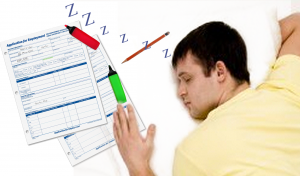
AppSleep1The image above can resonate with some of us, how filling in forms can infuriate and take a lot of energy out us, leaving us tired and frustrated and sometimes not even wanting to bother. Well that’s how society can exclude many of us with neurological differences. A big sigh when we see them and a bigger sigh when they are complete when it comes to dyslexia and filling in forms.

Whether you are applying for a job, college, university, passport or bank account; we all have to complete forms of one kind or another.


Paper forms are unreliable for various reasons:

  • they get lost in the snail mail
  • lost by the person filling the form (if you have a working memory difficulty, thats probably something that happens often)
  • (the most annoying, especially when it takes you so long to complete with copious amounts of stress) the organisations that sent you the forms that require you to send them, lose the forms you eventually send (Phew!)

Many dyslexic (non dyslexic) people get frustrated due to ongoing problems filling in a form. So we thought we would create a post about it.

Advice with form filling for dyslexics, dyspraxics and ADDers.

1. Before completing the form, contact the organisation and ask if they have a electronic copy of the form

For many PDF and Word document versions of a form are easier to compete. If this is the case for you there is no harm in asking.

2. Read instructions with a highlighter pen and highlight all requirements

This includes highlighting all the documents that have to be sent with the form.

This helps with remembering to include them and acts as a Todo list when completed, you will be able to see at a glance what is required.

3. Always write it all in pencil first

We advise that you should pester a is non-dyslexic/dyspraxic/ADDer friend/partner etc to read the form through.

4. Correct it while still in pencil, including double-checking all numbers, names etc.

Proofreading our own work is a (majority of the time) not a dyslexic, dyspraxic or ADDers strong point especially with their own work.

5. Get a friend to check it before you go over in pen

6. Use a black pen to write over the pencil

This is generally what is required for completing a form any way. Forms are dull and so is the colour black, with that in mind it could help you to remember that.

7. Only rub out the pencil once you are sure that it is correct and it has been completely filled out in pen

If you still make a mistake do not whiteout. Instead just cross out and then initial mistake.

8. Always make a copy the form before sending off

Use a photocopier, scanner or even your smartphone (if you have one). With a smartphone you can email it to yourself or you can upload it to Evernote. This is in case it gets lost or someone wants more info.

9. Go through all the instructions you highlighted before sending off the form

Frequently organisations that request you to complete a form, will also ask for other documents to be sent with the completed form.

Filed Under: ADHD/ADD, Dyslexia, Dyspraxia, Neurodiversity

  • Page 1
  • Page 2
  • Go to Next Page »

Primary Sidebar

Call us…

  (+44) 07971 714 217

News and blog

  • New Report: Supporting students living with ADHD at University: Working better together
  • Embracing My “Attention Difference Hyperdrive” – Brief journey to Self-Acceptance
  • ADHD Meds May Boost Cognitive Skills Long-Term, But Weigh Pros and Cons
  • 1-1 support over the summer (Dyslexia tuition, ADHD coaching, Autism Mentoring, Mental Health) London and Surrey
  • Embracing neurodivergence
  • “Why have I never been taught this before??!”
  • Celebrating Neurodivergent Voices within UAL

About us

  • Know our services
  • Our Know How
  • Know How Difference
  • Know about our services

Design

With an emphasis on typography, white space, and mobile-optimized design, your website will look absolutely breathtaking.

Learn more about design.

ADHD Info & Checklist

ADHD Questionnaire

From a medical perspective, Attention Deficit Hyperactivity Disorder (ADHD) is a neurobiological … Find out more... about Adult ADHD Information

Dyslexia Info & Checklist

Dyslexia Question Logo

Dyslexia people experience difficulty learning to read fluently while maintaining full … Find out more... about What is Dyslexia?

Dyspraxia Info & Checklist

DyspraxiaLOGO

Developmental coordination disorder (DCD), also known as developmental dyspraxia, is a neurological … Find out more... about Dyspraxia and DCD information

Copyright © 2025 NeuroKnowHow Limited · Log in