• Skip to primary navigation
  • Skip to main content
  • Skip to primary sidebar
NeuroKnowHow

NeuroKnowHow

Neurodiverse People Who Know How

Menu
  • Home
  • About
    • Close
    • Know about our services
    • Know-how difference
    • Know our experience
    • Know our testimonials
    • Close
  • Know us
    • Close
    • Joseph Aquilina
    • Louise Grimmett
    • Nilsa Abdula
    • Matthew Hancock
    • Victoria Capewell
    • Dr Ross Cooper
    • Dr Elizabeth Capewell
    • Close
  • Our services
    • Close
    • ADHD Coaching
    • Assistive Technology Tutoring
    • Specialist Study Skills Support (SpLD or ASC)
    • DSA Specialist Mentoring (Mental Health)
    • Specialist Mentoring (Autistic Spectrum)
    • Visual Reading course
    • Support for students in Years 10-13
    • Courses & Workshops
    • Close
  • For Needs Assessors
  • Resources
    • Close
    • Information
      • What is Neurodiversity?
      • Adult ADHD Information
      • What is Dyslexia?
      • Dyspraxia & DCD Information
      • DSA Non Medical Helper rates
      • Glossary
    • Questionnaires
      • Adult ADHD questionnaire
      • Adult Dyslexia Questionnaire
      • Adult Dyspraxia Questionnaire
      • Multiple-intelligence questionnaire
    • Freebies
      • Free strategy printouts
    • Policy and Procedures
      • Complaints Policy
      • Complaints Procedure
    • Close
  • News & Blog
  • Connect with us…
    • Close
    • Send us a message
    • Service feedback
    • Login
    • Close
    • Close
    • Close

brain-e

ADHD = Attention Deficit Hyperactivity and Disorder or Attention Difference Hyper Drive

23/08/2012 by brain-e

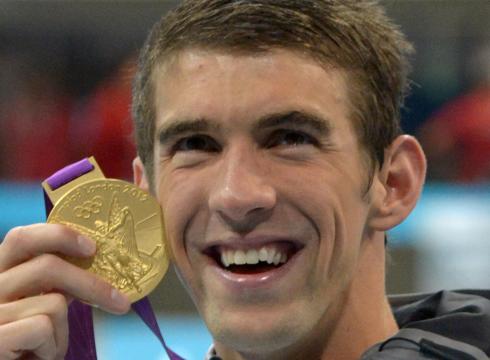
There are many people who have done exceedingly well due to having a diagnosis7dd3ecc84115e21dd7c0db0ad0a036b2697a5f39 of ADHD or to have been presumed to be or have been ADHD. Prominent individuals who have “come out” as having an ADHD diagnosis include: Michael Phelps, Justin Timberlake, Britney Spears, Jim Carrey and Rory Bremner to name a few. Those that have been presumed to have had traits that would fit symptom traits include Sigmund Freud, Richard Branson (who is dyslexic so far I have not read from a reliable source or heard him mention he has had a diagnosis of ADHD, please comment with a link if you have found one), Thomas Edison and Steve Jobbs etc etc etc.
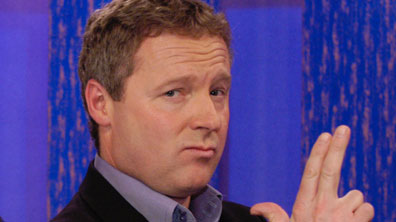


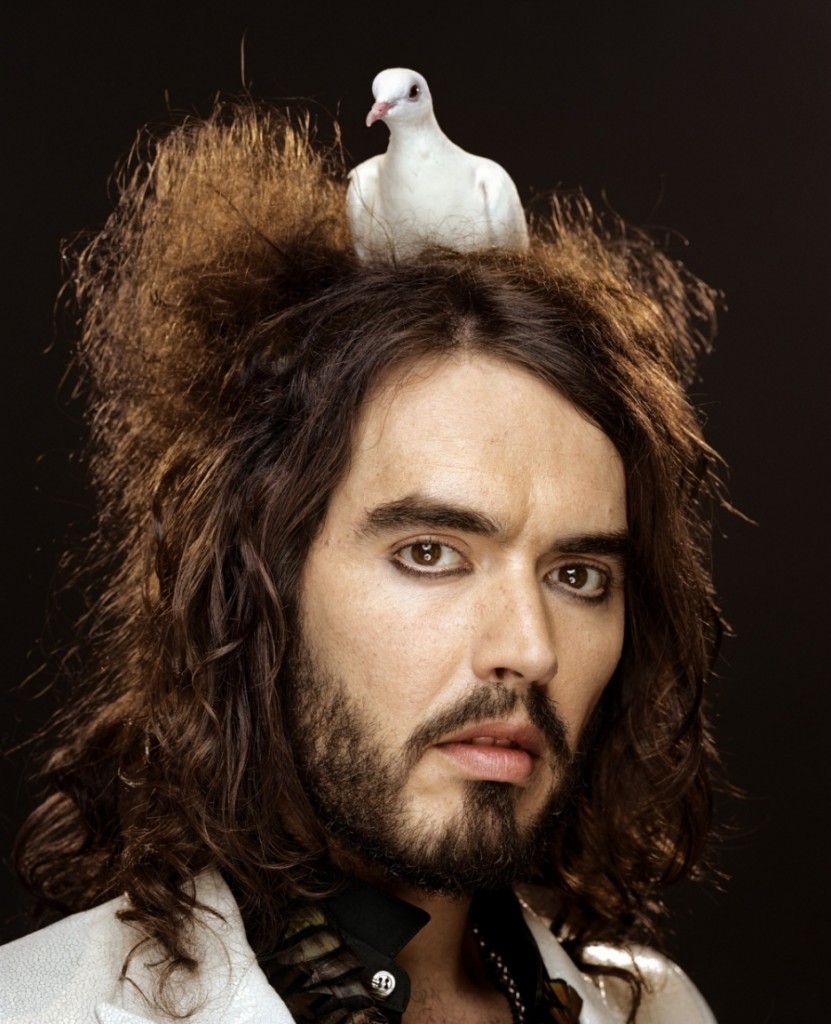
It is said that many people with an ADHD diagnosis have many positive attributes including: copious amounts energy, russell-brand1creativity in many fields, a high IQ, divergent and quick thinking, a good sense of humour and the ability to hyper-focus. Having a diagnosis of ADHD myself, I can say from an observation of my skill set that this is true (yes I know it sounds smug). However in this world of two poles, for every positive there is probably a negative. One could ask, how strong is the negative pull, if there are any strategies to help pull in the opposite direction; this all depends on what life has served up for each individual with an ADHD diagnosis. To get a better perspective there is a study at the Institute of PPhelps-swims-into-history-with-19th-medal-N71VNN6R-x-largesychiatry entitled “The Advantages of ADHD”.
ADHD is usually described as an impairing condition and most research has focused on understanding the causes of ADHD and the associated problems often seen in clinics. For this reason ADHD has come to be understood from mainly a negative perspective. However some evidence suggests that children and adults with ADHD may also have certain advantages (specific strengths, talents or resources) that occur because of their symptoms. Through a series of research interviews with adults with ADHD, the aim of the study is to determine whether some people consider their symptoms to be positive, as well as negative, and to better characterise any advantages associated with ADHD.



Filed Under: ADHD/ADD, Joseph's Blog Tagged With: ADHD

Cheatsheet app for learning Apple Keyboard Shortcuts

17/08/2012 by brain-e

Anyone who has received assistive technology tutoring from any of NeuroKnowHow tutors, or know that we strongly advocate the use of keyboard shortcuts. Whether you are a Windows PC user on Apple Mac user, keyboard shortcuts help you to save time and also reduced the risk of developing RSI (repetitive strain injury), and carpal tunnel syndrome; both of which are disabilities in our own right and can make the use of a computer unbearable as well as other day-to-day activities.

All NeuroKnowHow  clients are provided with our PDF toolkit which includes a visual guide and tool for learning keyboard shortcuts for both operating systems.  The idea is that they are printed up and placed in front of you where you use your computer, preferably on the wall and not on the person’s forehead who may sit opposite you. So all depends on where your computer is placed.

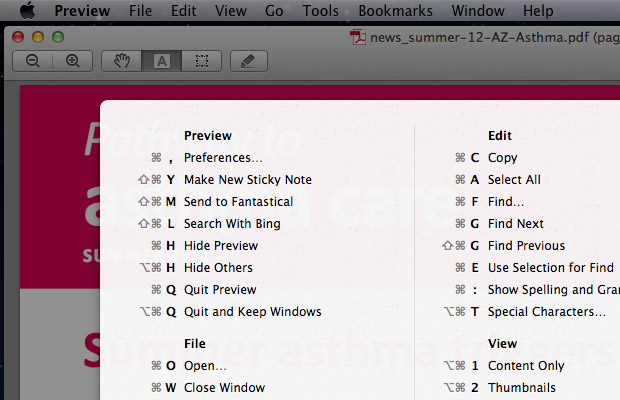
Depending on how many software packages at use there are myriad of  keyboard shortcuts that you could learn. A Swedish developer has created a Cheatsheet app for learning Apple Keyboard Short-Cuts for the Mac OS X 10.7 and above  that allows you to view all the available keyboard shortcuts for the current application that you are using at a click of a button.

After downloading the app, load it up, and it will appear in you dock.

To get the most out of the Cheatsheet app, it should be set, to open up at login. This can be done as the animated gif image below illustrates.

  1. Hold down mouse click on icon
  2. A bubble will appear (as illustrated)
  3. Move across the options and select “open at login”

openatlogin_cheatsheet


It is a really easy way of learning Apple Keyboard Shortcuts and the list of shortcuts change depending on which window you have active or document you are working on.

mac_cheatsheet01

I was going to make a video, but thought I would post a a YouTube video by someone else.

Filed Under: Assistive Technology

UNiFORMity: dyslexia and filling in forms

17/07/2012 by brain-e


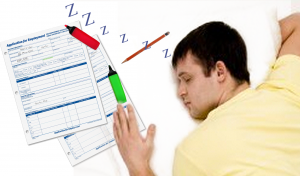
AppSleep1The image above can resonate with some of us, how filling in forms can infuriate and take a lot of energy out us, leaving us tired and frustrated and sometimes not even wanting to bother. Well that’s how society can exclude many of us with neurological differences. A big sigh when we see them and a bigger sigh when they are complete when it comes to dyslexia and filling in forms.
Whether you are applying for a job, college, university, passport or bank account; we all have to complete forms of one kind or another.


Paper forms are unreliable for various reasons:

  • they get lost in the snail mail
  • lost by the person filling the form (if you have a working memory difficulty, thats probably something that happens often)
  • (the most annoying, especially when it takes you so long to complete with copious amounts of stress) the organisations that sent you the forms that require you to send them, lose the forms you eventually send (Phew!)

Many dyslexic (non dyslexic) people get frustrated due to ongoing problems filling in a form. So we thought we would create a post about it.

Advice with form filling for dyslexics, dyspraxics and ADDers.

1. Before completing the form, contact the organisation and ask if they have a electronic copy of the form

For many PDF and Word document versions of a form are easier to compete. If this is the case for you there is no harm in asking.

2. Read instructions with a highlighter pen and highlight all requirements

This includes highlighting all the documents that have to be sent with the form.

This helps with remembering to include them and acts as a Todo list when completed, you will be able to see at a glance what is required.

3. Always write it all in pencil first

We advise that you should pester a is non-dyslexic/dyspraxic/ADDer friend/partner etc to read the form through.

4. Correct it while still in pencil, including double-checking all numbers, names etc.

Proofreading our own work is a (majority of the time) not a dyslexic, dyspraxic or ADDers strong point especially with their own work.

5. Get a friend to check it before you go over in pen

6. Use a black pen to write over the pencil

This is generally what is required for completing a form any way. Forms are dull and so is the colour black, with that in mind it could help you to remember that.

7. Only rub out the pencil once you are sure that it is correct and it has been completely filled out in pen

If you still make a mistake do not whiteout. Instead just cross out and then initial mistake.

8. Always make a copy the form before sending off

Use a photocopier, scanner or even your smartphone (if you have one). With a smartphone you can email it to yourself or you can upload it to Evernote. This is in case it gets lost or someone wants more info.

9. Go through all the instructions you highlighted before sending off the form

Frequently organisations that request you to complete a form, will also ask for other documents to be sent with the completed form.

Filed Under: ADHD/ADD, Dyslexia, Dyspraxia, Neurodiversity

Dyslexic Poetry

08/07/2012 by brain-e


Forgotten Letters

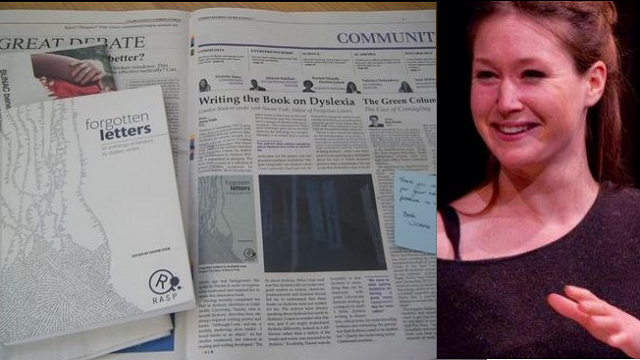
Dr Naomi Folb has worked extremely hard to bring some of the most well known and obscure but brilliant poets together for an anthology. Published by RASP her publishing company, Forgotten letters is the first of it’s kind; a paradox that can be held in the palm of your hand.

There are some notable poets who have got involved included Benjamin Zephania and Philip Schultz. There are are also some lesser known poets who are notable campaigners for positive dyslexia awareness (less of the deficit please), including DYSPLA organiser Alennie Varvaridea and Dr Naomi Folb herself. Not forgetting of course, me with two poems entitled “Where Ya comin’ from” and “The sWord”.

Its available from Amazon too, so get a copy and support and help us boost our self-esteem, and appreciate these Magic Spellers. Oh! and one more thing, when you get a copy it’s not worth trying to read it backwards, back to front or upside-down as that won’t help you understand our holistic dyslexic abstract world, we’ve all “reasonably adjusted” it for the majority, so there’s no excuses.

Filed Under: Dyslexia, Joseph's Blog, Mental Health, Neurodiversity Tagged With: Dyslexia, DYSPLA, Poetry, RASP, writing

Thou Art – A film about outsiders, creativity & mental health?

11/04/2012 by brain-e

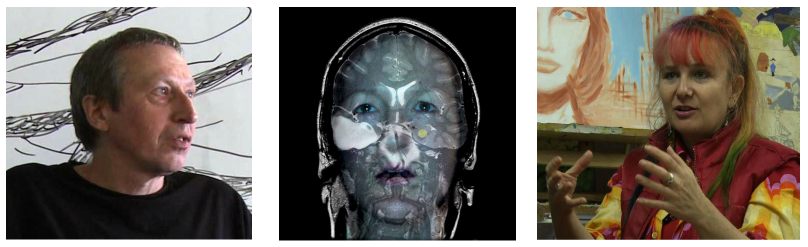
Back in October I attended a showing of a film called Thou Art. The film was part of a project of the same name which was a collaboration between South London & Maudsley NHS Foundation Trust and University of the Arts London, funded by the Arts Council England and the South London and Maudsley Charitable Trust. Individuals who have a mental health history made the film itself and the art within it, this included the direction of the film, the music and the artists who are interviewed in the film.

The film explores how each artist makes their work and the barriers they encounter as individuals with mental health issues and as individuals who have this innate need to create. Through interview and being able to view their artwork as the film progresses, you obtain an idea of how important this urge to create art is to these individuals as artists, as human beings and as therapeutic practice and the need to survive through the creativity and its process, as well as the need to survive in the world we live today.

Thinking differently

Before the film screening the director, Jake Stratton explained the background of film and a bit about himself. He explained that he had had a Bi-polar diagnosis (his personal connection to the film’s subject), furthermore, he also saw himself as a creative person, working professionally as an editor in television following studies at London College of Communication, part of the University of the Arts London. He explained that he left school with no academic qualifications eventually finding work in a car maintenance garage.

Fatma

One artist we encounter in the film is named Fatma. She has a diagnosis of Schizophrenia and dyslexia (a co-morbidity from a medical perspective) and explains: “sometimes being dyslexic interferes with learning, being Schizophrenic also interferes with learning”. Another artist expresses how he makes art to express things that he finds difficult to put into word. I ask, ‘is it because what he is trying to express is too abstract for words or is it because he has always had a difficulty with words?’

Deviating from the norm

“Without deviation from the norm, progress is not possible” Frank Zappa

1 in 3 students at the University of the Art’s London are dyslexic . Dyslexia is defined and characterised by a difficulty with working memory, sequential processing and gets its name from difficulties associated with the development of the ability to process language-based information in the way that is expected by conventional schooling and education. In the early years of education the official recognition of an individual as having these difficulties would probably be down to a number of varying factors including financial background and severity of difficulties. However, there are those with an unintentional mask; an underlying ability leading to the development of coping strategies. Recognised by teachers, this underlying ability masked by difficulties can be perceived as laziness, clumsiness, lack of interest or a number of other derogatory labels. This can lead to these individuals having low self-esteem, becoming withdrawn, becoming depressed or angry and frustration expressed through bad behaviour. These metaphors misread by teachers can lead to ridicule or punishment and rejection from their peers. Those who get recognised late in life as adults have probably just struggled to get by; with their underlying ability being ignored and can label themselves with the same derogatory labels they were told as a child; becoming adept at negative self-talk that only decreases their idea of self-worth, in turn affecting emotional aspects of how they understand themselves and how they associate to the world around them. There are similar sequential difficulties that are less obviously detected from poor spelling and poor reading; those who are dyspraxic, with dyscalculia, Aspergers, ADHD or ADD. Many people whose behaviours and difficulties fit the spectrum of difficulties can go undiagnosed until adulthood or their entire life. These adults, like the children above could have the low self-esteem, depression and anxiety which are in themselves considered mental health conditions, this sense of being excluded would obviously affect your mental health. There are of course also those that don’t get recognised at all.

Paul

The need to create

So why the need to create? It’s an esoteric question, repeated it seems in every essay within the book Art and Theory. The same applies to the question that mankind has always asked – Why are we here?

As far as history and anthropology shows us, creating stuff is an intrinsic part of being human. Whether through the need to solve a problem, or just trying to make sense of the human condition and existence, these combinations of neurological processes, emotions, senses and thought are innate. Furthermore, without any of these there is nothing to express: no expression = no creativity.

Creativity has been associated with divergent thinking by psychologists and academics. Sir Ken Robinson has published books and talks about this. A test of using this ability would be to ask someone what can be done with a paper clip and record how many things that person can come up with. It has been said that divergent thinking is a thought process or method used to generate creative ideas by exploring many possible solutions, if you have a problem with sequencing its is possible that your ideas, conversations etc, can go off on tangents in a different direction. This can either get you lost or on an adventure where you find something new, or linking things that usually don’t get linked, or through calculation or chance create new idea or a new thing. This in essence is creativity. People with the above labels and other mental health conditions often have a difficulty with the their working memory. The working memory affects executive function in the brain allowing it to process information in a linear sequential way. If an individual has difficulties with working memory, processing information sequentially presents problems.

Outing the insiders

A person who creates art not having an art school education and indoctrination, may identify themselves as an artist,yet the art establishment is likely to have them labelled as an outsider artist. The term outsider artist has been used to pigeonhole art by the clinically insane. Ironically, there is are a majority of art school school students who have come from white upper or middle-class backgrounds (an elite majority of insiders) who strive to be the cliched art school student: to rebel, to be bohemian. However, the meaning of the word bohemian can be explained as ‘one who has informal and unconventional social habits’. If you look at the synonyms relating to the word bohemian, they can all be related to how society expects people not to be. Being an individual who is neurologically different with or without a diagnosis can make you feel like an outsider, especially as you are more likely to do, smell, taste, see, hear, think, process and feel things differently.

Triptick!

Defining and finding your own personal genius

With a diagnosis of ADHD and dyslexia is the person co-morbid because of who they are and how they are supposed to be, or is it because they are a particular way that doesn’t “fit-in” with what is considered to be the norm. They are in a minority that thinks differently, creatively, holistically, non-sequentially/disorganised, tangentially, divergently.

The above mental states can easily be related to, or attributed to mental health issues and in some respects are on a list of mental health symptoms. This could be a result of how the education system and society expects us to be. If you are predestined genetically to think differently, are you predestined to be an outsider? Relating to Cooper’s Bagatelle Model of Neurodiversity to mental health, the way one thinks will affect the way one feels. If you think like you do not belong, you will more than likely feel like you do not belong. These are thoughts of exclusion, negative thoughts that will have a negative affect on the way the person who is thinking them, chemically and biologically.

It seems that creativity and excellence in any field is admired by most as genius and madness seems to be a common occurrence and almost a cliche. Van Gogh presumed bi-polar is probably the most renowned. It seems that part of being human is mental health and its instability. The other ways of thinking and viewing the world are what lead to new horizons and new ideas. It is the general consensus in contemporary society the we accept people of different cultures and colour of skin, but these are easily noticed through sight and sound. There are hidden subtleties that still seem taboo that are stigmatised and still not accepted as part of the human condition.

I thought I would end this post with some quotes related to the topic…

“For me, insanity is super sanity. The normal is psychotic. Normal means lack of imagination, lack of creativity.” -Jean Dubuffet

“It seems to me madness to wake up in the morning and something other than paint, considering that one may not wake up the following morning” Frank Aurbach

“No excellent soul is exempt from a mixture of madness.” Aristotle

“No great genius has ever existed without some touch of madness” Seneca

Filed Under: ADHD/ADD, Aspergers, Dyscalculia, Dyslexia, Dyspraxia, Joseph's Blog, Mental Health, Neurodiversity

Neurodiversity Non-linear thought how School kills creativity

02/03/2012 by brain-e

I thought I would start this blog by talking about where a lot of the difficulties start, looking at the education system. My PG cert thesis 6 years ago, was on dyslexia and creativity; explaining that dyslexic individuals are more likely to be creative, whether in the arts or sciences. To many dyslexia specialists use the term lateral thinking to describe the thought process of people with these different styles: ADDers, dyspraxics, Aspies etc that fall into the Neurodiversity spectrum. Essentially, an individual with executive functioning difficulties would lean away from convergent sequential thought processes and more towards divergent/tangental/holistic thought. The term lateral thinking was coined by Edward DeBono as mentioned I believe in this video (I havent seen it in a while). Lateral Thinking is a process that DeBeno devised to promote creativity amongst convergent/linear thinkers, it is a way to allow a conventional thinker to think out of the box or to think out of the linear way into a new direction… Divergent thinking just happens… like a eureka moment, non-sequential and unpredictable.

The Lateral Thinking process probably works well for sheep who go the same way and can be herded. The education system and society expects everyone to be a sheep, to fit in to the pen or box… but some of us are goats that jump around and is difficult to herd (using Will Self’s analogy for Why prison’s fail), which is why schools fail and why essentially why society fails to be able to deal with people thinking differently. Why just eat grass… when you can eat loads of other stuff. Its funny how the education system and society has to put people into boxes, whether you black, white, brown, dyslexic, ADHD etc…. Then there are those that say… To progress there is the need to think out of the box then why is it then those who think out of the box are the one who are always the first to be excluded in education and society, by failing the education system, being institutionalized and undermined.

Filed Under: ADHD/ADD, Aspergers, Dyscalculia, Dyslexia, Dyspraxia, Mental Health, Neurodiversity Tagged With: ADHD, Creativity, divergent, Dyslexia, education

  • « Go to Previous Page
  • Page 1
  • Page 2
  • Page 3
  • Page 4
  • Page 5
  • Go to Next Page »

Primary Sidebar

Call us…

  (+44) 07971 714 217

News and blog

  • New Report: Supporting students living with ADHD at University: Working better together
  • Embracing My “Attention Difference Hyperdrive” – Brief journey to Self-Acceptance
  • ADHD Meds May Boost Cognitive Skills Long-Term, But Weigh Pros and Cons
  • 1-1 support over the summer (Dyslexia tuition, ADHD coaching, Autism Mentoring, Mental Health) London and Surrey
  • Embracing neurodivergence
  • “Why have I never been taught this before??!”
  • Celebrating Neurodivergent Voices within UAL

About us

  • Know our services
  • Our Know How
  • Know How Difference
  • Know about our services

Design

With an emphasis on typography, white space, and mobile-optimized design, your website will look absolutely breathtaking.

Learn more about design.

ADHD Info & Checklist

ADHD Questionnaire

From a medical perspective, Attention Deficit Hyperactivity Disorder (ADHD) is a neurobiological … Find out more... about Adult ADHD Information

Dyslexia Info & Checklist

Dyslexia Question Logo

Dyslexia people experience difficulty learning to read fluently while maintaining full … Find out more... about What is Dyslexia?

Dyspraxia Info & Checklist

DyspraxiaLOGO

Developmental coordination disorder (DCD), also known as developmental dyspraxia, is a neurological … Find out more... about Dyspraxia and DCD information

Copyright © 2025 NeuroKnowHow Limited · Log in